
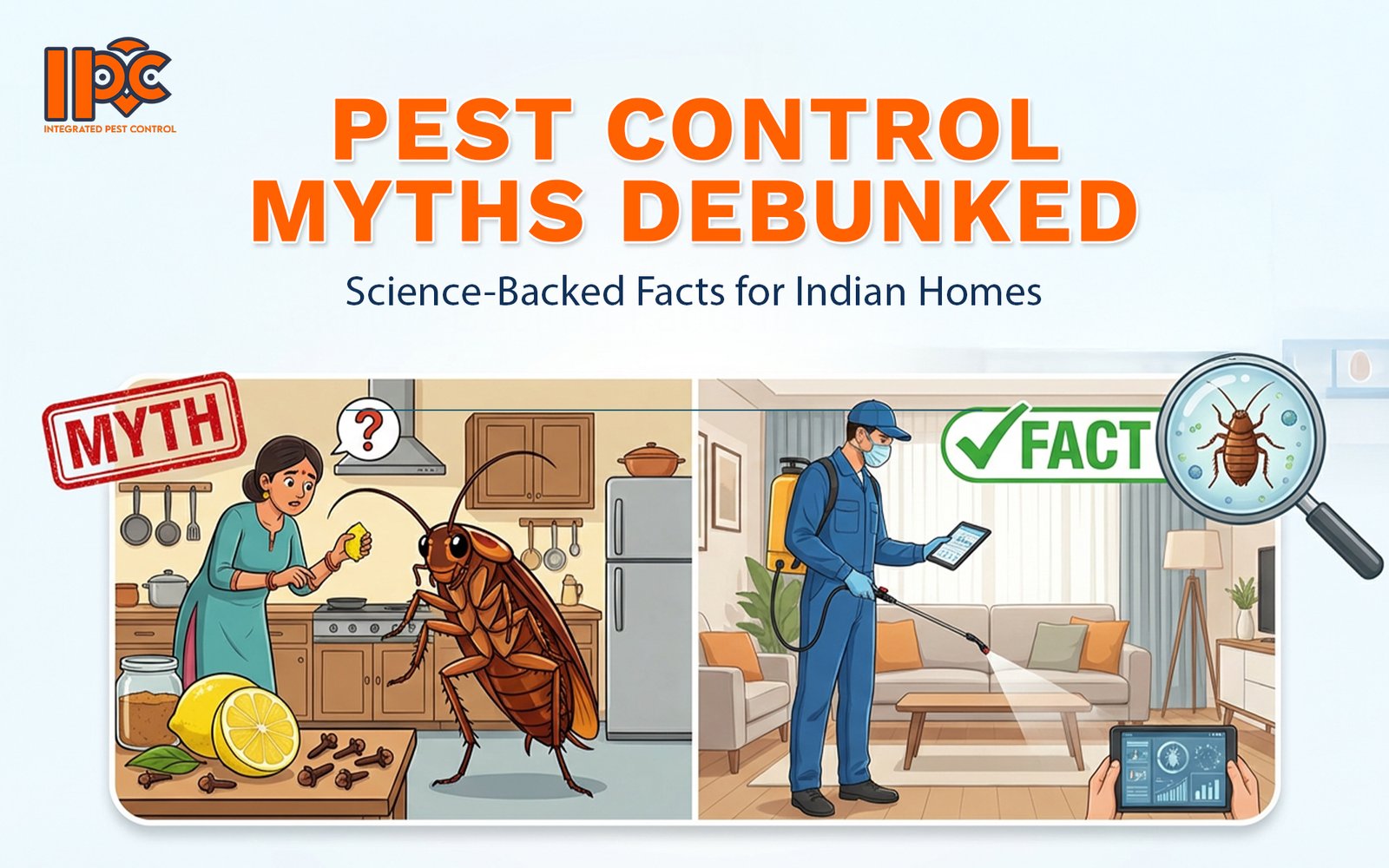
Have you ever placed cucumber peels around your kitchen to ward off cockroaches? Or invested in an ultrasonic pest repeller, expecting it to drive away rats and mosquitoes? If these methods didn't work as promised, you're not alone. As pest control experts serving Kolkata and Guwahati since 2010, we've seen countless homeowners waste time and money on ineffective solutions.
The internet is flooded with pest control myths that sound convincing but often deliver disappointing results. Understanding the difference between pest control facts and fiction can save you time, money, and frustration while protecting your family's health. In this comprehensive guide, we'll separate science from superstition by examining the most common pest control myths circulating in Indian households.
Why Pest Control Myths Persist and Why They Matter {#why-myths-persist}
Before diving into specific myths, it's worth understanding why misinformation spreads so easily in India. Many beliefs are passed down through generations ("My grandmother always used..."), shared on viral WhatsApp forwards, or marketed by companies selling quick-fix products.
The consequences can be serious: Delayed professional intervention allows pest populations to grow exponentially. Consider these facts from the Indian Council of Medical Research:
A single female cockroach can produce 400+ offspring in her lifetime
Mosquitoes can breed in as little as 1 teaspoon of standing water
Rats reproduce so quickly that one pair can have 15,000 descendants in a year
Understanding what truly works isn't just about convenience—it's about protecting your family from diseases like dengue, malaria, and leptospirosis.
Myth 1: Ultrasonic Pest Repellers Effectively Drive Away Pests {#myth-1}
The Claim: Plug-in devices emitting high-frequency sound waves will drive away pests without chemicals.
The Reality: Despite aggressive marketing, scientific evidence overwhelmingly shows these devices don't work.
Key Evidence:
Federal Trade Commission (FTC) Actions: The FTC has taken action against multiple manufacturers for "unsupported claims"
University of Nebraska Study: Found "no significant pest deterrent effect" in controlled tests
Habituation: Pests quickly get used to the sounds (like humans adapt to traffic noise)
Penetration Issues: Sound waves don't travel through walls or furniture effectively
What Actually Works:
Integrated Pest Management (IPM) combining sanitation, exclusion, and targeted treatments
For rodents: Mechanical traps + entry point sealing
For mosquitoes: Eliminating breeding sites + professional fogging
Field Experience: "We recently treated a Kolkata apartment where the family had spent ₹8,000 on ultrasonic devices over 6 months. The cockroach infestation had actually worsened because they delayed proper treatment." – Arun Sharma, IPC Bharat Lead Technician
Need rodent control? Explore our professional rodent management services
Myth 2: Cockroach Chalk & Essential Oils Are Safe, Effective Solutions {#myth-2}
The Claim: Drawing lines with cockroach chalk or spraying essential oils creates barriers pests won't cross.
The Reality: These methods offer limited effectiveness with potential risks.
The Problem with Cockroach Chalk:
Unregulated Pesticides: Many contain uncontrolled doses of chemicals like deltamethrin
Safety Hazard: Looks like regular chalk to children and pets
Scatter Effect: Drives pests deeper into walls without eliminating them
Resistance Development: Decades of overuse have created resistant cockroach populations
The Truth About Essential Oils:
While some oils show mild repellent properties in labs, real-world effectiveness is minimal:
Evaporation Problem: Oils dissipate quickly, requiring constant reapplication
Relocation, Not Elimination: Pests simply move to untreated areas
Pet Risks: Tea tree and eucalyptus oils can be toxic to cats and dogs
What Actually Works:
Sanitation First: Eliminate food/water sources
Gel Baits: Modern formulations like fipronil work through colony elimination
Professional IPM: Combines multiple strategies for lasting results
Struggling with cockroaches? Our gel bait treatments eliminate entire colonies
Myth 3: DIY Pest Control Is Just as Effective as Professional Services {#myth-3}
The Claim: YouTube tutorials and store-bought pesticides are sufficient for any pest problem.
The Reality: While DIY can handle minor issues, most infestations require professional expertise.
DIY vs. Professional: The Critical Differences
When to Call Professionals:
Recurring infestations despite DIY efforts
Structural pests (termites, wood borers)
Health-risk pests (mosquitoes, rodents)
Large or multi-unit properties
Book a professional inspection to identify hidden infestations
Myth 4: Clean Homes Don't Get Pest Infestations {#myth-4}
The Claim: Spotless homes are immune to pests.
The Reality: Even immaculate homes face infestations. Pests seek shelter, warmth, and minute food sources.
Why Clean Homes Still Get Pests:
Bed Bugs: Hitchhike on luggage/clothing, unrelated to cleanliness
Termites: Feed on wood structure, not food residues
Mosquitoes: Breed in clean water (vases, AC trays, plant saucers)
Rodents: Enter seeking warmth during monsoons/winters
The National Vector Borne Disease Control Programme reports that 75% of urban mosquito breeding occurs in clean water containers, not dirty drains.
What Actually Works:
Regular inspections (especially pre-monsoon)
Structural maintenance (sealing gaps, installing screens)
Professional preventive treatments
Myth 5: Natural Pest Control Methods Are Always Safer {#myth-5}
The Claim: "Natural" automatically means "safe and effective."
The Reality: Toxicity depends on chemical structure and dose, not origin.
Important Distinctions:
Natural ≠ Non-toxic: Arsenic and nicotine are "natural" but deadly
Concentration Matters: Essential oils require careful handling
Allergy Risks: Natural pyrethrum triggers severe allergies in some people
Pet Dangers: Many natural products harm cats/dogs
Modern synthetic pesticides undergo rigorous safety testing and are applied by trained professionals using targeted methods that minimize exposure.
What Actually Works: Focus on integrated approaches rather than product origin. Prioritize:
Non-chemical methods (exclusion, sanitation)
Least-toxic effective options when chemicals are needed
Professional application for safety and efficacy
Myth 6: Keeping Lights Off Prevents Mosquitoes {#myth-6}
The Claim: Mosquitoes are attracted to light, so darkness prevents bites.
The Reality: Mosquitoes are attracted to CO₂, body heat, and odors—not light.
Scientific Evidence:
Indian Council of Medical Research: Confirms Aedes mosquitoes (dengue carriers) are daytime biters guided by visual/chemical cues
Culex mosquitoes (encephalitis vectors) follow CO₂ plumes in evenings
Light traps work by combining UV light + CO₂ + attractants, not light alone
What Actually Works Against Mosquitoes:
Eliminate Breeding Sites: Empty containers weekly, ensure proper drainage
Physical Barriers: Window screens, mosquito nets, fans
EPA-Approved Repellents: DEET, picaridin, or IR3535 formulations
Professional Fogging: Community-level protection during monsoon peaks
Protect your family with our comprehensive mosquito control programs
Myth 7: Rats and Mice Will Leave If You Get a Cat {#myth-7}
The Claim: Cats provide natural rodent control.
The Reality: Most domestic cats are ineffective rodent controllers.
Why Cats Often Fail:
Well-Fed Pets: Lack hunting motivation
Fear Factors: Many cats fear adult rats
Nocturnal Advantage: Rats are active when cats sleep
Reproduction Race: One cat can't outpace rodent breeding rates
Disease Risk: Rodents carry diseases transmissible to cats
What Actually Works for Rodent Control:
Exclusion: Seal entry points >¼ inch
Sanitation: Store food in rodent-proof containers
Trapping: Snap traps remain most effective
Professional Services: Systematic elimination + prevention
The Science-Based Approach to Effective Pest Control {#science-approach}
After debunking these myths, here's what actually works:
4 Pillars of Effective Pest Management:
Prevention First
Regular maintenance and sanitation
Structural repairs before monsoon season
Professional pre-treatment for high-risk areas
Accurate Identification
Correct species identification
Understanding biology and behavior
Recognizing early warning signs
Integrated Pest Management (IPM)
Combine multiple control tactics
Minimize chemical use
Target root causes, not just symptoms
Professional Expertise When Needed
Licensed, trained technicians
Access to commercial-grade products
Systematic monitoring and adjustment
Frequently Asked Questions {#faqs}
Q: Do home remedies for pests ever work?
A: Some show limited effectiveness for minor issues (soap-water sprays for aphids, boric acid for cockroaches when properly applied). However, they rarely eliminate established infestations and shouldn't replace comprehensive approaches.
Q: Are pest control chemicals safe for children and pets?
A: Modern products used by licensed professionals undergo extensive safety testing. At IPC Bharat, we use targeted applications that minimize exposure while maximizing effectiveness. We always conduct pre-treatment safety consultations about household members and pets.
Q: How often should I schedule pest control in Kolkata/Guwahati?
A: For our monsoon-prone region:
Residential: Quarterly preventive treatments recommended
Commercial/Food: Monthly services often needed
Mosquito Control: Bi-weekly during peak monsoon (June-September)
Termite Protection: Annual inspections + 5-year warranties
Q: Can pests develop resistance?
A: Yes—when exposed repeatedly to the same chemicals. This is why professional services rotate product classes and use IPM approaches to prevent resistance. DIY methods often fail over time due to resistance development.
Q: What certifications should I look for in pest control companies?
A: Verify:
Current state pest control license
Insurance coverage for liability
Technician training certifications
Memberships in professional associations
Guarantees/warranties on services
Conclusion: Make Informed Decisions Based on Science
Understanding pest control myths versus facts empowers you to protect your home effectively. The internet offers endless advice about natural methods and DIY solutions, but effectiveness requires evidence-based approaches, not wishful thinking.
At IPC Bharat, with over 14 years of experience serving Kolkata and Guwahati, we've seen the consequences of myth-based pest control:
Families spending thousands on ineffective gadgets
Health risks from delayed mosquito control
Property damage from undetected termites
Repeated infestations from incomplete DIY treatments
Effective pest management combines prevention, accurate identification, integrated control methods, and professional expertise when needed. Rather than wasting time and money on ultrasonic devices or essential oils, invest in strategies proven by scientific research and decades of field experience.
Ready for Science-Based Pest Control?
Schedule a Free Inspection: Our certified technicians identify vulnerabilities you might miss
Get a Customized IPM Plan: Tailored to your home, family, and local pest pressures
Enjoy Guaranteed Protection: Backed by our satisfaction warranty
Don't let myths compromise your family's health and comfort. Contact IPC Bharat today for pest control based on facts, not fiction.